







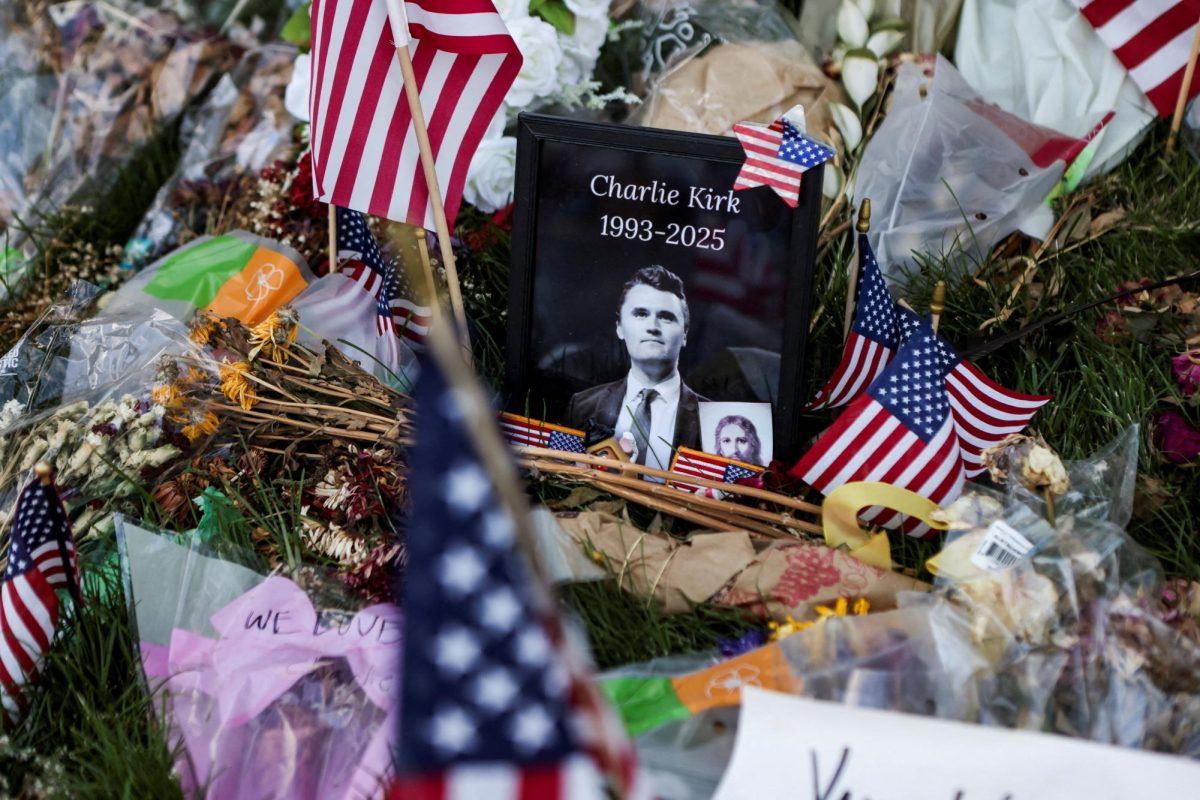
The level of tension between the political left and political right that exists in the United States right now is destined to reach a boiling point, fueled by the continuous and rising acts of political violence, and the outcome of that peak could be detrimental.
Political violence is, “the use of physical force, coercion, or intimidation to achieve political goals.” In the past year alone, three notable examples of this violence have occurred in America: the attempted assassination of then-presidential candidate Donald Trump; the attempted and successful assassinations of two Minnesota lawmakers and their spouses; and most recently the assassination of right-wing commentator Charlie Kirk.
The political divide that exists between the political left and right is now the worst it has been in generations. Even former Secretary of Defense Chuck Hagel said at his symposium at UNO, this divide is the worst he has seen in his lifetime, and he is 79.
This polarization has led to this increase in political violence. People see the “other side” not as someone they simply disagree with, but as their mortal enemy. This polarization has only been further inflamed by the words of leaders, encouraging the dangerous rhetoric spread by the fringes of their supporters.
Historically, this rise in violence can lead to a rejection of democracy as violence is seen as an effective tool to achieve political goals. It shows the overall rejection of our sacred political process, a direct rejection of democracy.
Recently, the president of the United States, Donald Trump, spread an AI-generated video on Truth Social, of himself flying a fighter jet over “No Kings” protesters dropping feces on them.
While that video was not inherently violent, normalizing these demeaning images of political opposition can lead to violent action, especially if the president is the one normalizing it.
It is easy to make a connection to historical events where harmful rhetoric has led to widespread political violence. During the Rwandan Genocide, radio stations broadcast hateful propaganda against the Tutsi minority, calling them cockroaches, and gave further allowance to the Hutu majority to act against their perceived enemy. This resulted the deaths of an estimated 800,000 Tutsis.
After Kirk’s death, Trump said in a news conference, “The radical left causes tremendous violence,” and that they should “be put in jail.”
“We can confidently say that most domestic terrorists in the U.S. are politically on the right,” according to PBS in reference to their own research. Left-wing violence is also an issue, and no violence should be ignored, but Trump not only spread false information but further incited possible violence against left-wing protesters.
However, this violence has no political bounds, rising on both sides. According to the Center for Strategic and International Studies, “2025 marks the first time in more than 30 years that left-wing terrorist attacks outnumber those from the violent far-right.”
The most notable example of the past year was Kirk’s Sept. 10 assassination. The video of the assassination quickly spread on X, displaying this brutal act of violence before the entire world. While Kirk’s assassin was not explicitly left-wing, he said to a roommate, “I had enough of his hatred,” and “Some hate can’t be negotiated out.”
This very idea, that “hate” and different ideals cannot be talked about and debated, but must be stopped at the cause, the very person who says those words.
If this level of tension continues to rise, it will lead to an increase in violence or in the worst case, a full civil war.
The only way for this problem to be solved is for our leaders to stop inciting this violence and for the people who commit these acts to realize it only brings us further apart, not closer together. Because if this trend continues, the future of the U.S. could be up in the air.