








“Born in the U.S.A.,” “Born to Run,” and “Glory Days” are instantly recognizable hits from Bruce Springsteen, an artist whose music defines decades of American rock. His cultural weight makes him a natural subject for a biographical film.
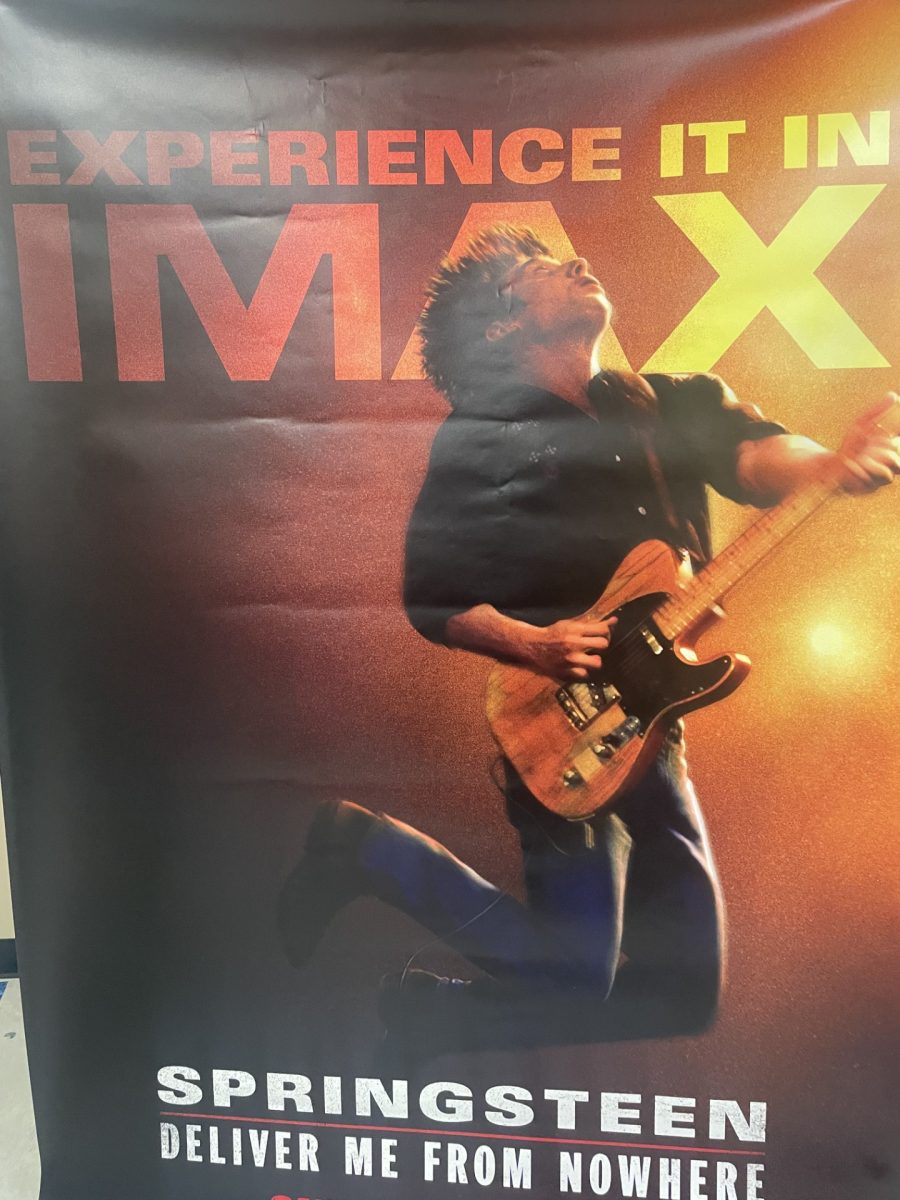
Yet, “Springsteen: Deliver Me from Nowhere” isn’t the typical glossy rock biopic I was expecting. While it left me somewhat unsatisfied, it also deepened my understanding of Springsteen’s life and the haunting story behind his “Nebraska” album.
I went in expecting a generic telling of a music star’s life, but this film caught me off guard. It dives into Springsteen’s chaotic upbringing, particularly his strained relationship with his father. Acting as a caretaker to his alcoholic father, Springsteen was forced to grow up too quickly, and that early pain echoes throughout his music. The film captures how that emotional weight pushed him toward risk and recklessness in his 20’s and 30s. The choice to focus not just on adversity, but on its psychological aftermath, set this movie apart.
Jeremy Allen White, taking on the large task of portraying Springsteen, delivered a raw and convincing performance. While I wasn’t expecting him to make a good Springsteen — he peaked with Lip Gallagher in “Shameless” — he did capture the necessary feelings. His intensity mirrored Springsteen’s restless energy, especially during the recording sequences of “Nebraska.”
Released in 1982, “Nebraska” is one of Springsteen’s most unusual albums. Instead of making a big, full-band rock record, he recorded simple demos at home on a basic tape machine and ended up liking the rough versions so much that he released them as-is (despite his producer’s wishes—they cover this in the movie). The album is quiet, stripped-down and a lot more serious than his usual hits. He based it after seeing coverage about Nebraska serial killer Charles Starweather. Even though it’s not flashy, many fans and critics consider “Nebraska” one of his most powerful and personal projects.
Rather than glamorizing success, the film mirrors the album and lingers in moments of solitude and uncertainty, long nights, reckless highways and quiet tension that reveal more about the man than Wikipedia could. The cinematography matches that tone, often washed in cold grays and muted browns, reminding me of fall in Nebraska.
Still, the pacing dragged on at times, and the film’s heavy introspection only covered the mental adversity of Springsteen rather than his on-stage fire. It was a surprise when the film ended, and that was all that had been covered. The choice to focus so narrowly on one album and period of his life, while thematically strong, made the story feel incomplete. For a figure as legendary as Springsteen, more triumphs and less depressing moments were warranted.
Even with its imperfections, “Springsteen: Deliver Me from Nowhere” was a powerful portrait of an artist wrestling with identity, guilt and purpose. It wasn’t the celebration of fame I expected, but rather a meditation on the loneliness that lingers behind his loudest anthems. Much like “Nebraska,” the film is stark, slow, and haunting, and yet, the discomfort it evoked in me is what I will remember.